Cybersecurity Risk Assessments

Understand Your Risk. Prioritize What Matters.
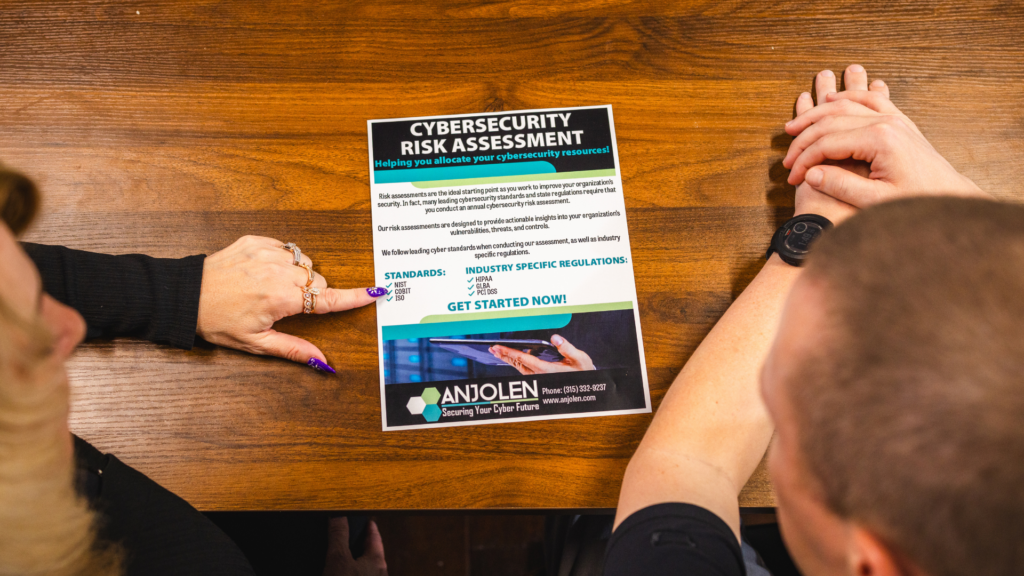
Cybersecurity programs face more potential risks than most organizations have the time, budget, or resources to address at once.

ANJOLEN’s Cybersecurity Risk Assessments provide a structured way to identify, analyze, document, and prioritize those risks using recognized cybersecurity frameworks and your organization’s actual business environment.

A CLOSER LOOK

Turn Cybersecurity Into a Business Risk Conversation

A useful risk assessment goes beyond creating a list of technical vulnerabilities.

ANJOLEN evaluates the systems, information, business processes, people, third parties, safeguards, threats, and dependencies that influence your organization’s cybersecurity risk.

This helps leadership understand what needs protection, which threats matter most, where vulnerabilities exist, what safeguards are already in place, how likely a negative event may be, what the business impact could be, and which risks require action first.

The result is a documented, prioritized view of cybersecurity risk that can support security planning, investment, governance, and ongoing improvement.

Risk assessment frameworks

Industry-Aligned Risk Assessments

Proven frameworks. Practical insights. Real-world impact.

NIST Risk Assessment

ANJOLEN’s NIST Risk Assessment combines the NIST Cybersecurity Framework 2.0 with risk-assessment principles from NIST SP 800-30. The assessment considers organizational context, critical assets and services, threats, vulnerabilities, existing safeguards, likelihood, business impact, third-party dependencies, and risk-treatment priorities. Deliverables can include a prioritized risk register, NIST CSF Current Profile, executive reporting, and a practical improvement roadmap.

HIPAA Risk Assessment

Organizations that create, receive, maintain, or transmit electronic protected health information need to understand the risks affecting that information. ANJOLEN’s HIPAA Risk Assessment is structured to support the HIPAA Security Rule risk-analysis requirement and is informed by HHS Office for Civil Rights guidance. The assessment evaluates where ePHI exists, how it moves, the systems and third parties that interact with it, reasonably anticipated threats and vulnerabilities, existing safeguards, likelihood, and potential impact. The result is an organization-specific risk analysis and prioritized recommendations for reducing identified risks. This service supports an organization’s HIPAA risk-analysis process but does not provide legal advice or guarantee compliance.

ISO Risk Assessment

ANJOLEN’s ISO Risk Assessment aligns with ISO/IEC 27001:2022 requirements and ISO/IEC 27005:2022 risk-management guidance. The engagement evaluates organizational context, information assets, threats, vulnerabilities, existing controls, likelihood, consequences, risk ownership, acceptance criteria, and treatment options within the organization’s Information Security Management System scope. It can support ongoing ISMS governance, risk treatment, continual improvement, and certification readiness where applicable. ANJOLEN does not issue ISO certification or guarantee the outcome of a certification audit.

WHICH ASSESSMENT DO YOU NEED?

Which Risk Assessment Is Right for You?

NIST provides a flexible cybersecurity risk-management approach suitable for organizations across many industries. HIPAA is designed around risks to electronic protected health information and the requirements facing covered entities and business associates. ISO integrates cybersecurity risk management into an ISO-aligned Information Security Management System.

ANJOLEN can help determine the appropriate methodology based on your industry, obligations, objectives, and existing security program.

NIST

Broad Risk Management Across Industries

HIPAA

Focused on ePHI and Healthcare Requirements

ISO

Integrated with an Information Security Management System.

TAKE THE NEXT STEP

Actionable Risk Management

Regardless of framework, the objective is the same: turn cybersecurity risk into information leadership and technical teams can actually use.

SOLUTIONS

about

resources

DETECT. PROTECT. RESPOND.